
- Topics
- Feature
- Opportunities & Events
- About
- Hindi Portal
- Data
- Topics
- Feature
- Opportunities & Events
- About
- Hindi Portal
- Data
The invisible crisis in aquifers
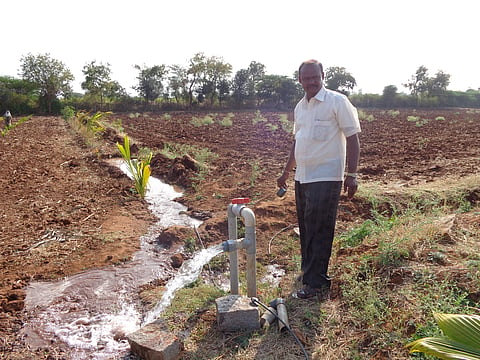
India Water Portal Flickr

Groundwater is often seen as the safest source of water because it lies hidden beneath the earth, protected from the pollution visible in rivers and lakes. For millions of people across India, it is the water that flows from household taps, irrigates fields, and sustains daily life during dry seasons.
But what if the water beneath our feet is changing in ways we cannot see?
A recent study from Vaniyambadi in Tamil Nadu raises troubling questions about the hidden costs of industrial growth. The research found that while groundwater appears suitable for use under conventional assessments, many samples contain dangerous levels of toxic metals and excessive salinity. The findings reveal a silent form of contamination that can affect human health, agricultural productivity, and long-term water security. More importantly, they highlight a growing challenge facing industrial regions across India: ensuring that economic development does not come at the expense of the groundwater systems on which communities depend.
A recent study titled “Hydrochemical assessment of groundwater for drinking and irrigation suitability in Vaniyambadi region, Tamil Nadu” (Cleaner Water, 2025) reveals how groundwater systems in industrial clusters are undergoing profound chemical transformations. The findings are both nuanced and alarming: while much of the water appears usable by conventional standards, deeper analysis shows significant contamination risks—particularly from heavy metals linked to industrial activity. This is not a story of immediate collapse but of gradual degradation masked by partial compliance.
The illusion of “good” water
At first glance, the groundwater quality in Vaniyambadi appears reassuring. The study reports that nearly 68 percent of samples fall within “excellent” or “good” categories based on the Water Quality Index (WQI) . Most major ions—calcium, magnesium, chloride, and sulfate—are within permissible limits, suggesting that the aquifer retains some natural buffering capacity. However, this apparent safety is misleading.
A closer look reveals that 88 percent of samples exceed WHO limits for Total Dissolved Solids (TDS), indicating widespread salinity issues. More critically, concentrations of toxic heavy metals—including chromium, cadmium, nickel, and lead—are significantly above safe thresholds.
This contradiction exposes a structural flaw in groundwater assessment: aggregate indices like WQI can obscure localized but severe toxic risks. Water may appear chemically balanced overall while still posing serious health hazards.
Industrial footprints in the aquifer
The contamination patterns observed in Vaniyambadi are not incidental. They are deeply tied to the region’s industrial profile, particularly its leather tanning industry. The study identifies chromium levels five times above permissible limits, alongside elevated concentrations of cadmium, lead, and nickel. These contaminants are characteristic of industrial effluents: (i) Chromium from tanning processes; (ii) Cadmium and lead from battery and metal waste; and (iii) Nickel from electroplating and industrial corrosion.
The spatial distribution of contamination—concentrated near industrial clusters—further confirms that groundwater is acting as a sink for inadequately treated industrial discharge. Despite regulatory frameworks mandating effluent treatment, the persistence of these pollutants suggests gaps in enforcement, monitoring, and infrastructure.
When natural processes amplify pollution
Groundwater chemistry in the region is shaped by a complex interplay of natural and human-induced processes. The study highlights three dominant drivers. First, rock–water interaction, particularly carbonate weathering, contributes to the slightly alkaline nature of groundwater. Second, evaporation—intensified by semi-arid climatic conditions—concentrates dissolved salts and contaminants. Third, and most significantly, anthropogenic inputs from industrial discharge, agricultural runoff, and domestic wastewater introduce toxic elements into the aquifer.
These processes do not operate in isolation. Instead, they interact in ways that amplify contamination. For instance, evaporation increases the concentration of already present pollutants, while geological conditions influence how contaminants are stored and transported within the aquifer. The result is a hybrid hydrochemical system—part natural, part engineered, and increasingly unstable.
Agriculture at risk: The silent soil crisis
While groundwater contamination is often framed as a drinking water issue, its implications for agriculture are equally significant. The study finds that around 60 percent of groundwater samples remain suitable for irrigation, but 40 percent pose sodium-related risks . High sodium levels can degrade soil structure, reduce permeability, and ultimately lower crop productivity.
This creates a long-term risk scenario: farmers may continue using groundwater without immediate visible impacts, but over time, soil health deteriorates, leading to reduced yields and increased input costs. In regions already facing climate stress, this represents a compounding vulnerability—where water quality directly undermines agricultural resilience.
Public health: The invisible emergency
Perhaps the most concerning aspect of the study lies in its health risk assessment. The calculated Hazard Index (HI) values—8.384 for adults and 19.563 for children—are far above the safe threshold of 1 . These figures indicate a high probability of non-carcinogenic health effects from long-term exposure to contaminated groundwater.
Children are particularly vulnerable due to higher water intake relative to body weight. Metals such as chromium, lead, and cadmium are known to affect neurological development, kidney function, and overall health. What makes this crisis particularly insidious is its invisibility. Unlike acute contamination events, heavy metal exposure accumulates over time, often going undetected until health impacts become severe.
A broader pattern across India
Vaniyambadi is not an isolated case. Similar groundwater contamination patterns have been documented in other industrial regions of Tamil Nadu and across India. From the tannery clusters of Vellore to industrial belts in northern India, groundwater systems are increasingly showing signs of chemical stress. The drivers are consistent: rapid industrialization, weak enforcement of environmental norms, and overdependence on groundwater. This signals a broader shift in India’s water crisis—from one dominated by quantity concerns to one increasingly defined by quality challenges.
Rethinking groundwater governance
The findings of this study point to an urgent need for systemic reform in how groundwater is monitored, regulated, and managed. First, there is a need to move beyond single-index assessments like WQI. Groundwater evaluation must integrate heavy metal indices and health risk assessments to provide a more accurate picture of safety.
Second, industrial regulation must shift from compliance-based to outcome-based approaches. Instead of focusing solely on effluent discharge standards, monitoring systems should track impacts on groundwater quality in surrounding areas.
Third, groundwater governance must adopt an aquifer-level approach. Current policies often focus on individual wells or supply systems, overlooking the interconnected nature of aquifers. Mapping contamination hotspots and regulating land use in vulnerable zones is essential.
Bridging water and health systems
One of the most critical gaps revealed by the study is the disconnect between water quality monitoring and public health systems. Groundwater contamination rarely triggers health surveillance, even in high-risk areas. Integrating water quality data with health records can enable early detection of exposure risks and targeted interventions.
This could include:
Regular biomonitoring in affected communities
Health advisories based on water quality data
Targeted provision of safe drinking water in high-risk zones
Without such integration, policy responses remain reactive rather than preventive.
Towards safer water systems
Addressing groundwater contamination requires a combination of technological, institutional, and behavioral interventions. Decentralized water treatment systems—such as community-level filtration units—can provide immediate relief in contaminated areas. At the same time, long-term solutions must focus on reducing pollution at the source, particularly from industrial and agricultural activities.
In agriculture, promoting micro-irrigation, crop diversification, and soil management practices can mitigate the impacts of marginal water quality. For industry, stricter enforcement of zero liquid discharge and real-time monitoring systems is essential. Equally important is the need for continuous, multi-season monitoring of groundwater quality, supported by digital tools and open data platforms.
A crisis that demands attention
The groundwater crisis unfolding in Vaniyambadi is not dramatic, but it is deeply consequential. It is a crisis that unfolds slowly—through rising salinity, accumulating toxins, and gradual health impacts. It challenges long-held assumptions about groundwater as a safe and reliable resource. More importantly, it exposes the limits of existing governance frameworks in managing complex environmental risks.
As India continues to industrialise, the question is no longer just about how much water is available. It is about whether that water is safe, sustainable, and equitably managed. The answer, as this study suggests, will depend on how quickly policy, science, and governance can adapt to a reality where the most critical water challenges are no longer visible on the surface—but hidden deep below it.
The story unfolding beneath Vaniyambadi is easy to overlook because it is largely invisible. Wells continue to provide water, crops continue to grow and industries continue to operate. Yet signs of stress are accumulating beneath the surface. As India pursues industrial growth and faces increasing climate uncertainty, safeguarding groundwater quality will become just as important as securing water supplies. The challenge is clear: economic progress must not come at the cost of contaminating the very resource that sustains communities, agriculture and future generations.