
- Topics
- Feature
- Opportunities & Events
- About
- Hindi Portal
- Data
- Topics
- Feature
- Opportunities & Events
- About
- Hindi Portal
- Data
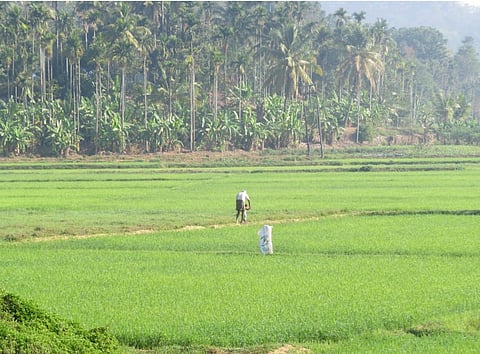
Paddy farms in Wayanad, Kerala.
Wikimedia Commons

In the paddy fields of Wayanad, farming is not just about growing rice. It is about reading the land, understanding seasonal changes, and working with nature. For generations, tribal communities have managed pests without chemicals by observing insect behaviour, using plants and natural materials, and carefully managing water and soil conditions. These practices are low cost, locally adapted, and deeply connected to the surrounding ecosystem.
As modern agriculture expands, this knowledge is slowly fading. What was once widely practised is now at risk of being lost. At a time when farmers face rising input costs, climate pressures, and ecological damage, these approaches offer practical and sustainable alternatives. They remind us that effective solutions often already exist within communities.
A recent open access study titled 'Compiling the wisdom of Kerala's indigenous farmers: A traditional rice pest management calendar' authored by S K Sreejinaa, M Nasser and M K Nandakumar published in the Indian Journal of Traditional Knowledge conducted among tribal farmers in Wayanad highlights how this knowledge continues to protect crops. Farmers use plant-based and animal-based preparations made from leaves, flowers, and other natural resources to control pests. The study also developed a pest management calendar based on these practices, offering a practical guide for farmers who may not be familiar with them.
Researchers selected Wayanad, which has the largest tribal population in Kerala, to document these methods during the Kharif season. Through field surveys and farmer interviews, they recorded a wide range of indigenous pest control techniques. To assess effectiveness, these preparations were applied during the vegetative to early flowering stages of rice growth, when crops are most vulnerable to pests. Pest incidence was measured seven days after application and tracked weekly over three weeks, confirming that these traditional methods can play a meaningful role in sustainable pest management.
Various traditional methods were employed by farmers in the study region to manage major insect pests, which included the following:
Mechanical removal of the insect pests
Rice leaf roller moth.
Quartl via Wikimedia Commons
Sweeping using a muram (bamboo winnower) or nets, along with handpicking, was commonly used to remove immature stages of caterpillars, while sweeping helped to remove adult insects and larvae. Branches of plants such as figs, Indian wormwood, and Jackal jujube were swayed to injure hidden plant-eating moths like the rice leaf roller, rice leaf folder, and the rice blue beetle, as these plants have rough leaf texture and thorns that aid in killing these pests.
Using plants with rough textures and strong odours to kill insects
Leaves of lemongrass were chopped and swung to wound caterpillars, as silica present on lemongrass leaves gives it a rough texture which, combined with bristles on the leaves kills caterpillars or makes them more susceptible to bird predation. Odours from Queen Sago flowers and dried sardine fish were used as repellents against rice bugs. Queen Sago flowers have toxic compounds that kill insects by interfering with their feeding and neural functions.
Flooding with water for pest management
Farmers used methods such as flooding fields with water during severe armyworm outbreaks that led to submergence of the worms, killing them or during brown plant hopper (BPH) invasions when fields were flooded for several days during the early to mid-tillering stage.
Brown plant hopper.
Wikimedia Commons
In contrast, rice caseworms, which float in silken leaf cases, were controlled by draining fields for 2-3 days during the early vegetative phase, which killed larvae due to dry conditions or exposed them to natural enemies as the pest thrives in waterlogged conditions. Draining was also believed to harden plant tissues, enhancing resistance to insect attack, possibly due to increased calcium uptake under drained conditions. Studies confirm that higher water levels can destroy BPH eggs laid within leaf sheaths, and field drainage helps to suppress leaf beetles and mole crickets.
Burning rice stubble, cutting, removing damaged parts of the plants and using light traps
Insects such as stemborers were managed by burning rice stubble, handpicking egg masses, cutting the leaf tops, removing the damaged parts of the rice plant and using light traps. The most common method of eliminating stem borers was rouging, i.e., cutting and removing the injured tillers of the rice plant.
Studies show that rouging should be done extensively over a vast region and several years to prevent the rice stem borer. Another method that works best on immature rice plants is removal of the whole plant when the central shoot of the plant dies due to stem borers. When a crop is harvested, lingering stem borer larvae and pupae remain in the stubble and straw. Rice straw is usually burnt soon after harvest, and the stubble is ploughed during land preparation. Both activities kill the residual stem borer populations.
Rice stem borer.
Jeevan Jose via Wikimedia Commons
Light traps were used by farmers to attract nocturnal moths of rice pests. Several farmers also reported lighting bonfires at night to attract and kill rice bugs and moths, a traditional practice still observed in some regions. However, studies show that the effectiveness of light traps varies, and farmers also reported inconsistent moth attraction and accidental killing of beneficial insects.
Traditional weed and rodent control methods and soil relocation
Many rice insect pests live on grasses found in fallow fields and near rice crops. Farmers thus piled up weeds to attract and manage pests such as armyworms, mole crickets, and field crickets. Other methods also included mowing and shaving rice bunds to disturb armyworm pupae, mole cricket tunnels, and grasshopper eggs found in the soil.
Soil from bunds was relocated into floodwater to drown pest eggs and pupae; fresh mud was sometimes applied to bund sides to trap mole crickets.
Using trap crops to lure insect pests
Another traditional technique also involved growing wild varieties of colocasia along field margins that acted as a trap crop for cotton leaf worm as larvae gorged on Colocasia leaves, reducing damage to rice.
Wild Colocasia plant in Kerala
Rameshng via Wikimedia Commons
Tribal farmers mainly used animal products like diluted buttermilk, jeevamrutham and panchagavya, and fish amino acids as well as plant products, namely neem oil emulsion, neem seed extract and tobacco emulsion, to control rice insect pests. Insect pests were successfully suppressed and repelled by panchagavya. Panchagavya is a fermented concoction made from five cow-derived products (dung, urine, milk, curd, and ghee) plus jaggery, banana, tender coconut, and water, used as a liquid fertiliser, growth promoter, and pesticide. It enhances soil fertility, increases microbial activity, and improves crop yields by providing essential nutrients and growth hormones, acting as a sustainable, low-cost input. These plant and animal-based treatments significantly reduced pest incidence in rice fields compared to untreated fields. Pest incidence in non-treated plots ranged from 33.7% to 41.5%, which reduced 14.2%-18.5% after treatment. Percent reduction in pest incidence varied from 53.75% to 62.50%, with jeevamrutham showing the highest overall efficacy (62.5%) against all insect pests. Neem-based products and tobacco emulsion also demonstrated strong control against specific pests like caterpillars, stem borers, and soft-bodied insects.
Managing birds, monkeys, wild boars
Using physical barriers, scarecrows, bird tapes
In Wayanad, birds were not killed due to religious beliefs, and very few measures were taken against them, despite their impact on grain yield. Thus, physical barriers were commonly used to keep them out. At times, scarecrows and bird tape were used to frighten birds and reduce grain loss during the ripening phases of paddy. Jackfruit, bird lime or fig latex were also used to trap birds in extreme cases.
Using loud sounds, movements
Firecrackers were widely used to scare monkeys; glass bottles dangling in the air and steel rods moving in the wind to make a noise were used to prevent deer from destroying crops. Bund shaving was done to detect rats in rice fields, while other methods such as owl perches on coconut fronds or dried tree branches in rice fields were also used to drive away rodents. Farmers hung steel plates, metal sheets, white cloths and plastic sheets and bags filled with castor leaf paste to frighten the wild boars due to fluttering movements and repel the boars due to strong smells from the castor leaf paste.
Jeevamrutham was made using cow dung, cow urine, pulse powder and jaggery, where each ingredient plays a vital role in enriching soil microbial activity and promoting plant health through natural means. Cow dung and cow urine are rich in beneficial microorganisms and nutrients, acting as biofertilisers that stimulate microbial populations essential for nutrient cycling. The jaggery (a sugar source) acts as an energy substrate, enhancing the multiplication of microbes. Pulse powder provides protein and amino acids, supporting microbial growth and enzymatic activity. The soil acts as a microbial inoculum, introducing native microflora into the solution. Stirring in both clockwise and anti-clockwise directions ensures uniform aeration and distribution of microbes. Fermenting the mixture in a shaded area for 14 days allows the microbial colonies to mature. When applied twice a month, the diluted jeevamrutham improves soil fertility, strengthens plant immunity, and reduces dependency on chemical fertilisers, thus supporting sustainable rice cultivation.
The neem tree seed contains extracts with numerous insect pest management benefits that repel insects, prevent them from laying eggs, and regulate insect growth while having no toxicity and environmental persistence.
Traditionally buttermilk is used for its sour odour, beneficial microbial activity, and film-forming ability that acts as a deterrent to insect pests and protects grains from infestation. Buttermilk has a population of bacteria such as Lactobacillus sp., which may help slow the spread of various bacterial and fungal infections and insect infestation
Traditional pest management calendar.
Sreejina, S.K., et al. (2026). Compiling the wisdom of Kerala's indigenous farmers: A traditional rice pest management calendar. Indian Journal of Traditional Knowledge Vol. 24(7), p. 636.
A traditional rice pest management calendar was developed based on the findings of the study. The agricultural year was divided into stages including field preparation, seed selection, seed treatment, basal application, seed broadcasting, cattle entry, weeding, and harvesting.
While traditional practices such as those used by tribal farmers in Wayanad are effective in improving production, preventing pests and improving resilience among crops, scientific validation of these methods, including their mechanisms, consistency and environmental impact, remains limited. The paper argues that collaborative research that values indigenous knowledge is essential for refining and adopting these eco-friendly practices in sustainable agriculture.