
- Topics
- Feature
- Opportunities & Events
- About
- Hindi Portal
- Data
- Topics
- Feature
- Opportunities & Events
- About
- Hindi Portal
- Data

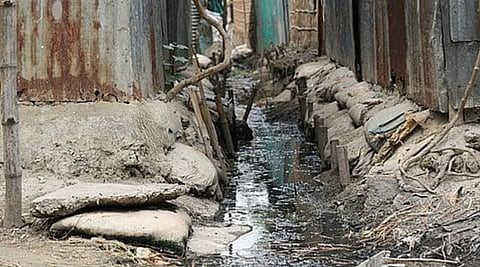
Cities are built to move water safely away from homes and streets. Gutters, drains, and channels are meant to protect public health by carrying runoff and waste out of sight and out of harm’s way. But when these systems are overloaded, neglected, or misused, they begin to tell a different story. When the gutters carry water mixed with loads of unsorted rotting garbage, untreated sewage, toxic waste, bacteria and antibiotic residues from hospitals as well as from chemical and pharmaceutical industries, all this harmful waste gradually enters into lakes, ponds and rivers as well as seeps into groundwater and finally our food, water and soil.
A recent study titled 'Resistome profiling and bacterial community structure of semi-urban gutter ecosystems of India' published in Nature, Scientific Reports from Roorkee, Uttarakhand, peeled back the microbial curtain on six urban gutter systems. What the researchers found was unsettling: antibiotic-resistant bacteria thrived in the very water that snaked through the streets. The bacteria had the ability to circumvent the impacts of antibiotics or resist the effects of antibiotics on them, posing a threat to human health and the environment in the long term.
Wastewater that drains in gutters is a dangerous concoction of bacteria that thrive in untreated sewage and loads of untreated industrial and pharmaceutical waste that have antibiotic compounds. These bacteria that float in the gutter waters that have antibiotic compounds evolve mechanisms to withstand or resist the effects of specific antibiotics by changing themselves. They can do so by secreting enzymes that can inactivate the antibiotic, changing the permeability of their cell membranes to prevent entry of the antibiotic, etc. These microorganisms that develop resistance to antibiotics are also referred to as ‘superbugs’, and the phenomenon is known as antibiotic resistance.
The danger isn’t confined to the gutter itself – as resistant bacteria can travel. When these microbes hitch a ride into food or drinking water, they can cause infections in humans.
Here’s the catch: if the infection is treated with an antibiotic like those commonly prescribed for diarrhoea, the bacteria may already be resistant. The drug fails, the illness lingers, and the patient continues to suffer. In severe cases, this can even become fatal.
And the risk doesn’t stop with one person. Resistant bacteria can spread from host to host, multiplying across communities. What begins as a hidden microbial skirmish in a gutter can escalate into a public health crisis, where our most trusted medicines no longer work, leading to difficult-to-treat infections, longer hospital stays, higher medical costs, and finally, increased mortality.
Antibiotic resistance can spread through water (rivers, lakes, and oceans can transport resistant bacteria and genes over long distances), soil (antibiotic residues and resistant bacteria can remain in the soil over long periods, entering the food chain and also affecting the microbial communities living in the soil), air (aerosols from manure, wastewater treatment, and other sources can also spread resistant bacteria and genes through the air) and animals (birds, insects, and other wildlife can act as carriers, spreading resistant bacteria across different locations).
The presence of antimicrobial resistance (AMR) in gutter samples is an emerging concern, particularly in urban and peri-urban areas where gutters often collect runoff from various sources, including households, healthcare facilities, and streets.
Six gutter ecosystems in Roorkee, Uttarakhand, were sampled during summer to assess bacterial communities and resistance genes for the study.
The study found that:
High levels of bacteria were found that were resistant against multiple antibiotic types, such as penicillin, cephalosporins, aminoglycosides, fluoroquinolones, and antifolates.
Every water sample tested in Roorkee’s gutters carried bacteria with beta-lactamase genes. These genes code for enzymes that can dismantle some of our most widely used antibiotics — including penicillins and cephalosporins. Once broken down, these medicines lose their power, leaving infections harder to treat and patients more vulnerable. In essence, the gutters weren’t just harbouring bacteria; they were nurturing microbes equipped with molecular tools to disarm our frontline antibiotics.
Among the bacterial communities thriving in Roorkee’s gutter waters, two families stood out: Enterobacteriaceae and Pseudomonadaceae. These groups include familiar names like Escherichia coli (E. coli) and Pseudomonas – both bacteria are known for their adaptability and resistance potential. They can survive in harsh environments, share resistance genes with other bacteria, and cause illnesses ranging from diarrhoea to respiratory infections. In short, the gutters weren’t just populated by random microbes; they were home to well-equipped survivors with a track record of challenging human health systems.
The findings from Roorkee’s urban gutters are more than a local concern; they are smaller beginnings of a bigger global crisis. Bacteria armed with beta-lactamase genes and resistant metabolic pathways can turn environments into hotspots of antibiotic resistance.
This isn’t just a medical challenge. It’s an environmental one. Resistant microbes don’t respect boundaries — they flow from drains into rivers, seep into soils, and slip into food and water systems. Tackling antimicrobial resistance (AMR) therefore requires holistic action that involves:
Medical interventions to stay ahead of evolving pathogens
Environmental management to reduce contamination at the source by better garbage and sewage disposal mechanisms and regulation of pharmaceutical and other industries to prevent antibiotics and medical wastes from draining into water and soil.
Improved sanitation infrastructure that prevents resistant bacteria from spreading through wastewater
Public awareness so communities understand the risks and act responsibly.
The lesson is clear: our health is inseparable from the health of our environment. By paying attention to the hidden ecosystems beneath our cities, we can better safeguard the food and water resources we rely on — and the lives they support.