
- Topics
- Feature
- Opportunities & Events
- About
- Hindi Portal
- Data
- Topics
- Feature
- Opportunities & Events
- About
- Hindi Portal
- Data
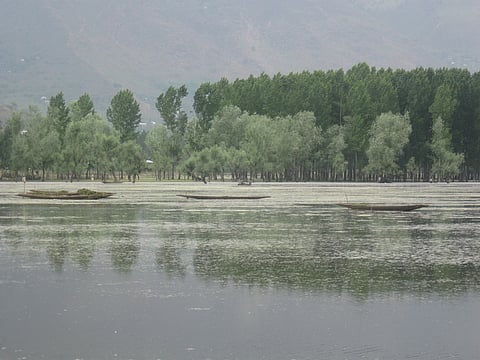
Wular lake in Kashmir.
Wikimedia Commons images

Kashmir’s lakes have long nourished both people and ecosystems. They provide water, support biodiversity, sustain livelihoods, and supply traditional foods that have shaped local cultures for generations. Yet beneath the calm waters of some of the Valley’s most celebrated lakes lies a growing environmental and public health concern.
A new research study published in Nature Scientific Reports reveals that water chestnuts harvested from Kashmir’s lakes contain alarming levels of heavy metals, raising serious questions about food safety, ecosystem health, and the future of communities that depend on these lakes. The findings point to a deeper problem: the steady deterioration of lake water quality under the pressure of untreated sewage, agricultural runoff, and other forms of pollution.
The study focuses on four major freshwater ecosystems in Kashmir: Dal Lake, Hokersar Wetland, Manasbal Lake, and Wular Lake. Together, they tell a troubling story of how pollution is moving through water, sediments, aquatic plants, and ultimately into the human food chain.
Lakes such as Dal, Hokersar, Manasbal, and Wular are important sources of the water chestnut, locally known as goer/gaer in Kashmir and singhara in India, a lifeline for thousands of families who harvest it from the lakes. The study reveals a disturbing truth. This staple food is laced with dangerous levels of heavy metals such as cadmium (Cd), chromium (Cr), copper (Cu), cobalt (Co), iron (Fe), manganese (Mn), nickel (Ni), and zinc (Zn).
Water quality of lakes in Kashmir is undergoing severe deterioration due to the discharge of large quantities of pollutants from domestic sewage, industries and agricultural runoffs. This has led to a disturbance in the ecological balance of the freshwater ecosystems, disrupted the nutrient cycling processes in the lakes, triggered eutrophication, and elevated pollutant accumulation, particularly toxic heavy metals in the water and sediment of the lakes.
Heavy metals are non-biodegradable and accumulate silently in sediments, plants, and aquatic life, eventually entering the food chain. Communities exposed to heavy metals through consuming contaminated food and water are exposed to health risks such as neurological disorders, renal dysfunction, cardiovascular diseases, and cancers.
Water chestnuts are rich in starch, proteins, minerals, and antioxidants. They form an important staple for rural communities and a valuable commodity in local markets. Beyond food, they contribute to nutrient cycling, carbon sequestration, and ecological balance in wetlands. The heavy metal uptake ability in water chestnuts poses dual challenges. While they can help remove pollutants from water and sediments through phytoremediation, they can also become a potential carrier for toxic heavy metals by entering the human food chain.
Studies on the effectiveness of water chestnut as a food source and a pollution bioindicator in the Kashmir Valley, however, remain limited, particularly across multiple lake systems experiencing anthropogenic stress.
The study quantifies heavy metal levels in water and sediments from Dal lake, Hokersar wetland, Manasbal lake, and Wular lake iand heavy metal accumulation patterns in water chestnut. Water, sediment, and water chestnut plant tissues (root, shoot, and fruit) were collected and analysed for eight heavy metals for the study.
Water chestnuts, Kashmir’s lifelines.
Wikimedia Commons images
The study finds that:
Dal lake has the highest water pollution levels
Water quality analysis shows progressive deterioration in Kashmir lakes, with Dal Lake showing the highest contamination levels due to organic pollution, while Manasbal and Wular lakes show comparatively lower pollutant loads. Total dissolved solids and nitrogen and total phosphorous are higher than desirable thresholds in the Dal and Hokersar lakes.
Biochemical Oxygen Demand (BOD) and Chemical Oxygen Demand (COD), key water quality parameters measuring pollution, are also higher than World Health Organisation (WHO) standards across all sites, particularly in Dal Lake, indicating high levels of organic contamination and poor self-purification capacity.
Heavy metal contamination is the highest in Dal lake waters
Heavy metal concentrations cross safe limits for Cd, Cr, Fe, Mn, and Ni, with Dal Lake recording the highest levels, followed by Hokersar wetland. This can be because of release of untreated sewage, agricultural runoff, and houseboat discharges into the lake. In contrast, Manasbal and Wular lakes, which have higher flushing rates and lower human interference, show reduced water contamination.
Sediments from the Dal lake also show highest heavy metal contamination
Dal lake has the highest concentration of heavy metals in its sediments, followed by Hokersar wetland. In contrast, Manasbal and Wular lakes show comparatively lower pollution loads due to better water exchange and reduced anthropogenic pressures.
Water chestnuts from the Dal lake are highly polluted with heavy metals
Water chestnut samples from Dal lake show the highest loads of heavy metal accumulation, while Wular lake show the lowest. Roots from water chestnuts have the highest load of heavy metals followed by shoots and fruits. This pattern indicates strong retention at the primary uptake site, the roots, which act as the first point of contact with contaminated sediments and water. While shoots and fruits also accumulate metals, the root-heavy load underscores how deeply pollution penetrates the aquatic system.
Heavy metals such as iron, cadmium, copper, cobalt, nickel and zinc show the highest levels of bioaccumulation in the roots of water chestnuts found in Dal Lake while zinc and cadmium levels are very high in the edible fruits of water chestnut. Hokersar wetland also shows a similar pattern but shows relatively less bioaccumulation as compared to Dal lake, probably due to wetland-mediated pollutant trapping. In contrast, Manasbal and Wular present comparatively lower heavy metal loads because of reduced external inputs and better hydrological flushing.
Cadmium in the water poses the highest risk
Dietary health risk assessment based on fruit consumption shows that cadmium poses the highest non-carcinogenic health risk, with its concentrations exceeding normal limits in the Dal Lake samples, indicating potential concern under regular consumption.
The presence of toxic heavy metals in the roots and the fruits of water chestnuts raises concerns over their safety over their long-term use in the diet. On one hand, water chestnut shows the capacity for phytoremediation by absorbing and retaining heavy metals from contaminated waters, but its role as a food crop complicates the picture. The presence of cadmium, chromium, nickel, copper, and other metals in edible tissues means that what is absorbed for ecosystem cleansing does not remain locked in roots alone. Instead, it travels upward into shoots and fruits, entering the human food chain, thus threatening the health of consumers.
Policy interventions need to prioritise the following to deal with this problem:
Regular testing of aquatic produce and fish for heavy metals, and results shared openly with communities.
Stricter enforcement of regulations on sewage and industrial effluents, restriction of agricultural runoff, and wastewater treatment and sediment remediation to reduce pollutant inflow into the lakes in Kashmir.
Introduction of controlled harvesting zones and periodic heavy metal screening of edible aquatic crops to safeguard local livelihoods.
Restriction on the consumption of water chestnuts from the Dal Lake until effective remediation and pollution-control measures are implemented.
Health risk assessment and metal bioavailability studies based on molecular-level responses of water chestnut to chronic metal exposure under field conditions.
Awareness programmes to inform consumers of risks and safe consumption practices.
Support for harvesters to transition to safer crops, eco-tourism, or other income sources.
Revival of natural filtration systems like reed beds, aquatic vegetation, and community-led conservation to reduce contamination loads.
These findings are a reminder that pollution does not remain confined to water bodies. It moves through sediments, plants, and food systems and, ultimately, into human lives. For generations, Kashmir’s lakes have sustained communities through food, water, livelihoods, and cultural traditions. Water chestnuts have symbolised this relationship between people and wetlands. Today, however, the same crop is becoming a warning signal of ecological decline.
The study shows that the challenge is not merely one of environmental contamination. It is also about food security, public health, and the survival of wetland-dependent livelihoods. Protecting Kashmir’s lakes will require more than pollution control. It will demand restoring the ecological integrity of these freshwater systems before contamination becomes irreversible.
The future of Kashmir’s iconic lakes depends not only on preserving their beauty but also on ensuring that the food, water, and livelihoods they provide remain safe for the generations that depend on them.