
- Topics
- Feature
- Opportunities & Events
- About
- Hindi Portal
- Data
- Topics
- Feature
- Opportunities & Events
- About
- Hindi Portal
- Data
Urbanisation and the toxic turn of Akkulam–Veli Lake
Rajithmohan

Cities often rise by erasing what came before. Wetlands are filled, lakes encroached, and ecosystems recast as infrastructure. But when these buried landscapes begin to push back, the consequences are harder to ignore. Urban lakes, among the most fragile ecosystems in fast-growing cities, function as ecological buffers, groundwater recharge zones, and vital recreational and cultural spaces. Across India, however, they are steadily degrading under the pressures of unplanned urbanisation, pollution, and disrupted hydrology. A 2026 study published in Evolving Earth offers a stark example through the Akkulam–Veli Lake system in Thiruvananthapuram, Kerala—revealing not just pollution but how unchecked urban growth can turn ecological assets into long-term public health risks.
The paper, titled “Heavy metal contamination in water and sediment of a tropical urbanising landscape: Insights from Akkulam–Veli Lake, south-west coast, India", presents a comprehensive hydrogeological investigation of heavy metal contamination in both water and sediments of the lake. What emerges from the study is not merely a localised environmental issue but a warning signal about the future of urban lakes in India’s rapidly expanding cities.
A lake in the path of urban expansion
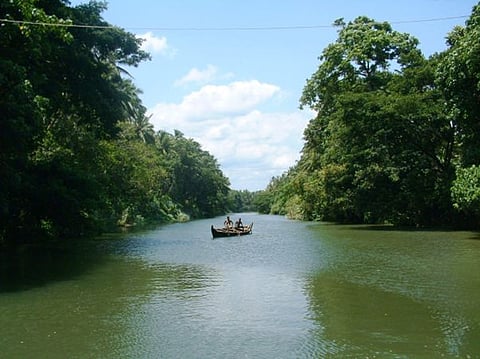
The Akkulam–Veli lake system lies on the northwestern edge of Thiruvananthapuram, about five kilometres from the city centre. The lake spans roughly one square kilometre and forms part of a hydrologically connected coastal network linked through the historic Parvathy Puthanaar canal system.
Once surrounded by vegetation and wetlands, the region has undergone dramatic land-use transformation over the past decade. Satellite analysis conducted in the study reveals a sharp rise in built-up areas between 2014 and 2023, accompanied by a steep decline in vegetation and wetlands. The numbers tell the story starkly. Vegetation cover declined from more than 70 percent of the landscape to about 27 percent within a decade, while settlement areas expanded to over 60 percent of the region.
Such rapid urbanisation fundamentally alters hydrological processes. Natural vegetation that once absorbed runoff and filtered pollutants is replaced by concrete surfaces that accelerate the flow of contaminated water into lakes and canals. In Akkulam–Veli, this transformation has triggered a cascade of environmental consequences.
Heavy metals in the lake: A growing environmental threat
The most alarming finding of the study is the significant accumulation of heavy metals in both lake sediments and water. Researchers analysed water and sediment samples using advanced laboratory techniques such as Microwave Plasma Atomic Emission Spectroscopy and Atomic Absorption Spectrophotometry.
The results revealed elevated concentrations of several heavy metals, including zinc (Zn), nickel (Ni), copper (Cu), lead (Pb), cadmium (Cd), iron (Fe), and chromium (Cr). Among these, lead emerged as the most severe pollutant. Sediment concentrations ranged from 66 to 260 mg/kg, exceeding permissible environmental limits by up to 6.5 times. Cadmium and chromium were also present at concerning levels, while zinc and nickel showed widespread enrichment across the lake sediments.
Heavy metals pose particular challenges in aquatic systems because they do not degrade. Instead, they accumulate in sediments, enter food chains, and can re-enter the water column when sediments are disturbed.
The study found that more than 99 percent of the contaminants are retained in sediments, effectively turning the lake bed into a long-term pollution reservoir. This means the contamination problem does not disappear even if pollutant inputs are reduced. The sediments themselves can continue releasing toxins over time.
Water quality concerns
Beyond heavy metals, the researchers detected serious water quality problems. Several water samples exceeded drinking-water standards for dissolved salts and chemical parameters. Total dissolved solids ranged from about 464 ppm to nearly 19,000 ppm, with multiple samples exceeding permissible limits. High concentrations of chloride, sulphate, and phosphate were also detected, indicating sustained inflow of sewage, industrial discharge, and urban runoff.
The presence of heavy metals in water is particularly worrying because it directly affects human exposure pathways. In the Akkulam–Veli system, zinc concentrations reached 5.6 mg/L, cadmium 0.24 mg/L, and chromium 0.09 mg/L, levels that frequently exceed drinking-water standards.
These contaminants are associated with severe health impacts. Lead affects neurological development and cardiovascular health. Cadmium can damage kidneys and bones, while chromium exposure is linked to carcinogenic risks.
Urbanization as the core driver
The study strongly links contamination patterns to land-use change. Spatial analysis shows that pollution hotspots occur near areas experiencing intense urban development, such as the Parvathy Puthanaar canal and Kochuveli. These zones are associated with untreated sewage inflows, industrial effluents, dredging and sediment disposal, and urban runoff from roads and construction sites.
Urban infrastructure development often disrupts wetlands that naturally filter pollutants. Once these ecological buffers disappear, contaminants reach lakes much more rapidly. The research also points to dredging activities as an additional problem. When dredged sediments are improperly disposed of or disturbed, they release previously trapped heavy metals back into the aquatic environment.
Sediments: The hidden pollution reservoir
One of the most important insights from the paper is the role of sediments as long-term contaminant storage. Sediments accumulate heavy metals through chemical processes such as adsorption and precipitation. Over time, they act as sinks that trap pollutants entering the lake.
However, these sediments can also become secondary pollution sources. Changes in oxygen levels, pH, or hydrological conditions can remobilise metals back into the water. In the Akkulam–Veli system, the researchers found that sediment contamination is particularly severe for lead and chromium. Pollution indices indicate moderate to strong contamination across most sampling sites.
This highlights a critical challenge: even if pollution sources are controlled today, legacy contamination in sediments will continue to influence water quality for years.
A warning for India’s urban lakes
While the study focuses on a specific lake in Kerala, its implications extend far beyond the region. Across India, urban lakes—from Bengaluru to Hyderabad, Delhi to Kolkata—are experiencing similar pressures.
Rapid urban expansion often occurs faster than environmental governance systems can adapt. Drainage channels become sewage conduits, wetlands are converted into real estate, and lakes become sinks for industrial and domestic waste. The Akkulam–Veli case shows how quickly ecological degradation can occur once urban growth accelerates.
Policy and governance lessons
The findings of the study point to several urgent policy priorities.
1. Strengthen urban wastewater regulation
One of the primary drivers of contamination is untreated sewage and industrial discharge.
Cities must ensure:
Strict enforcement of effluent discharge standards
Expansion of sewage treatment capacity
Monitoring of informal industrial clusters
Without controlling pollutant inflows, lake restoration efforts will remain ineffective.
2. Protect wetlands and ecological buffers
Wetlands play a critical role in filtering pollutants and regulating water flows.
Urban planning must integrate the following:
Wetland protection zones
Buffer strips around lakes
Restrictions on construction near water bodies
The loss of wetlands in the Akkulam–Veli catchment significantly reduced the system’s natural ability to filter contaminants.
3. Monitor sediment contamination
Many water quality monitoring programmes focus only on surface water. However, this study shows that sediments contain the majority of contaminants.
Urban lake management plans should therefore include:
Periodic sediment quality assessments
Sediment toxicity monitoring
Guidelines for safe dredging and disposal
Ignoring sediment contamination risks creating a hidden reservoir of pollution.
4. Integrate land use planning with water governance
Urban planning decisions directly influence water quality outcomes.
Cities need integrated land–water governance systems that connect:
land-use regulation
drainage management
water quality monitoring
Geospatial tools used in the study, including satellite-based land-use analysis and GIS-based contamination mapping, offer powerful tools for urban environmental planning.
5. Establish long-term monitoring systems
The researchers emphasise the need for multi-season monitoring and advanced analysis methods to track contamination trends.
Future studies should incorporate:
seasonal sampling across monsoon cycles
contaminant source apportionment
ecological and human health risk modelling
Such monitoring systems are essential for evidence-based environmental management.
The future of urban lakes
Urban lakes are often treated as passive water bodies rather than dynamic ecosystems. Yet they perform vital ecological functions—recharging groundwater, supporting biodiversity, regulating microclimates, and sustaining livelihoods.
The Akkulam–Veli study shows what happens when these ecosystems are overwhelmed by unregulated urban growth. Heavy metal contamination is not just an environmental problem; it is a public health issue and a governance challenge.
India’s urbanisation is expected to accelerate in the coming decades. Without proactive planning, many urban lakes could follow the same trajectory seen in Akkulam–Veli. Protecting these ecosystems will require a combination of scientific monitoring, regulatory enforcement, ecological restoration, and integrated urban planning. If cities fail to act, the cost will not only be degraded lakes but also compromised water security and environmental health for millions of urban residents.