
- Topics
- Feature
- Opportunities & Events
- About
- Hindi Portal
- Data
- Topics
- Feature
- Opportunities & Events
- About
- Hindi Portal
- Data
How gender affects disaster vulnerability and recovery
Anil Gulati, India Water Portal Flickr

When a flood, cyclone, heatwave or landslide strikes, it may appear that everyone in its path faces the same threat. However, people experience disasters differently. Gender, age, income, social status, disability, occupation and location can influence who is most exposed, who can evacuate, who receives warnings and who gets help. Treating disaster response as gender neutral can therefore leave some people overlooked.
A paper titled “Gender perspectives in disaster response: An evidence-based review”, by Alfred Acanga, Baker Matovu, Venugopalan Murale and Sudha Arlikatti, published in Progress in Disaster Science, examines how gender influences disaster vulnerability, preparedness, response and recovery. The authors reviewed 80 documents and found that, although gender is increasingly recognised in disaster policies, many existing frameworks and practices remain poorly equipped to address the different experiences of people during disasters.
The review makes an important point: adding the word ‘gender’ to a policy document does not make disaster response inclusive. It requires changes in how risks are understood, information is shared, communities participate and institutions make decisions.
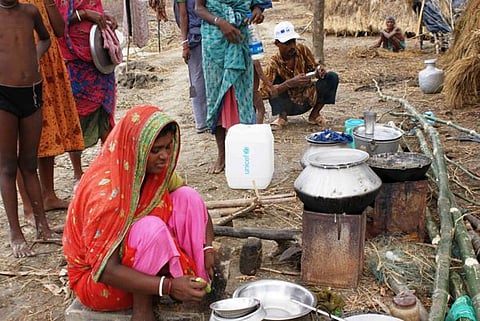
Women often face practical barriers during disasters. They may have less freedom to move, greater responsibility for children, older people and other family members, and fewer financial resources to recover after a disaster. Evacuation centres may also fail to provide adequate privacy, menstrual hygiene facilities, sexual and reproductive healthcare or safety. These are not secondary concerns. They can determine whether someone is able to leave danger.
However, the review points out that women are not the only people whose experiences of disasters are shaped by gender.
Men can face specific risks too. Social expectations around masculinity may encourage them to stay behind to protect property or take physical risks instead of evacuating. In some hazards, including floods, landslides, bushfires and heatwaves, male mortality has been found to be higher. The expectation that men should “prepare, stay and defend” can turn a social norm into a disaster risk.
Gender-diverse people may face discrimination, exclusion from relief services and difficulties accessing shelters and healthcare. Indigenous communities and other marginalised groups may also find that formal disaster systems do not recognise their social structures, knowledge or specific vulnerabilities.
There is, therefore, no single gender experience of a disaster. Gender intersects with poverty, age, ethnicity, disability, location and social position. Disaster planning must move beyond treating women as a single vulnerable group and examine who faces risks, why they face them and under what circumstances.
This requires better evidence. Sex and gender disaggregated data should be routinely included in disaster risk assessments, rather than collected only for specific studies. Without such information, institutions may not know which groups are being overlooked.
Governments and development agencies have made progress in recognising gender in disaster and climate policies. However, the review identifies a persistent gap between policy commitments and their implementation during preparedness, response and recovery.
One reason is that many disaster frameworks treat communities as relatively uniform groups. They focus on hazards, infrastructure, evacuation routes and emergency services without adequately considering how different people experience the same risks.
For example, a warning is useful only if people can receive it, understand it and act on it. Women with limited access to phones or public spaces may receive warnings differently from men. Older people may depend on neighbours or family members, while young people may rely more on schools and digital platforms. Indigenous communities may use oral knowledge and local environmental indicators alongside formal warnings.
Social networks can therefore be as important as technology. The review notes that women's networks can help people receive and respond to disaster information. However, poverty and patriarchal norms can limit the benefits of these networks.
Disaster agencies need to move away from treating communication as a one way process. Women's groups, schools, youth networks, Indigenous knowledge holders, local institutions and community organisations should help design warning and preparedness systems.
This also means changing who participates in planning. Women should not be invited only to provide “community feedback” after a disaster plan has already been designed. Their knowledge and experiences should shape the plan from the beginning.
The review emphasises that disaster resilience is not built only in government offices or emergency operations centres. Communities already have knowledge about local hazards, safe places, changing weather patterns and ways of coping with difficult conditions.
Indigenous and local knowledge can be particularly useful where formal warning systems are weak or fail to reach the last mile. However, traditional knowledge should not be romanticised or treated as a replacement for science. The authors call for it to be connected with scientific warning systems, infrastructure and institutional mechanisms.
For instance, a village evacuation plan should not be prepared only by an external technical team. Local residents can identify routes that become unsafe during floods, households that may need assistance, places where women feel safe, older people who live alone and community members who can help share warnings. This information can make a formal plan more practical and effective.
Schools and young people also have an important role in disaster communication. The review identifies schools, traditional media and digital platforms as useful channels and highlights approaches such as PhotoKwento, which enables young people to document and communicate local risks.
Young people should not be seen only as recipients of disaster education. They can also become communicators, observers and advocates within their communities.
The underlying principle is that people who live with risk should have a role in identifying and defining it. This requires disaster institutions to make community participation part of their everyday work.
The effectiveness of gender-responsive disaster management cannot be measured simply by whether a policy mentions women or a committee includes a few female members. The real test is whether institutions make decisions based on an understanding of how different groups experience disaster risks.
The review points to several changes needed to make this possible.
First, governments should routinely collect disaster data disaggregated by sex and gender. This should cover not only deaths but also evacuation, access to warnings, shelters, health services, livelihoods, asset loss and recovery. Without this information, inequalities may remain hidden.
Second, disaster preparedness should be designed with communities rather than simply delivered to them. Women's organisations, self help groups, youth groups, Indigenous institutions and other local networks can contribute both knowledge and the capacity to implement plans. Their involvement should continue through preparedness, response and recovery, rather than ending with consultation.
Third, disaster communication should use multiple channels. Digital alerts are useful, but they cannot be the only means of sharing warnings. Schools, local institutions, community workers, radio, social networks and trusted local leaders can help reach people who might otherwise be excluded.
Fourth, gender analysis should be part of disaster financing and institutional accountability. Agencies should demonstrate who benefited from a programme, who participated and whether resources reached groups facing particular barriers. Simply describing a programme as gender responsive is not enough.
Finally, institutions must recognise that vulnerability can change over time. A person may face greater risks during evacuation but fewer during recovery. Another may face limited physical danger but struggle to rebuild a livelihood. Gender interacts with these changing circumstances and needs to be considered throughout the disaster management process.
The review also calls for research that reflects local contexts, social learning, stronger collective agency, greater attention to the histories of vulnerability in the Global South and better ways of sharing knowledge. It emphasises the need for standardised sex and gender disaggregated data and greater inclusion of young people.
The challenge is to move these recommendations beyond research and policy documents and into the institutions responsible for disaster management. A disaster resilient society needs more than stronger infrastructure or faster emergency response. It must understand who is at risk, listen to communities before disasters strike and give different groups a meaningful role in shaping their safety.
Gender-responsive disaster management is not about creating a separate system for women. It is about building a system that works better for everyone by recognising that people do not face disasters from the same starting point. Until disaster institutions account for these differences, efforts to build resilience will remain incomplete.