
- Topics
- Feature
- Opportunities & Events
- About
- Hindi Portal
- Data
- Topics
- Feature
- Opportunities & Events
- About
- Hindi Portal
- Data
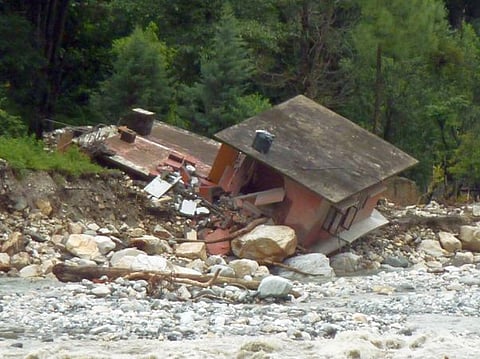
Uttarakhand flood
European Commission, DG ECHO; Wikimedia Commons

In Uttarakhand, a flood can leave people with little time to prepare. A cloudburst can turn a mountain stream into a torrent within minutes, while landslides can block roads, bridges can be washed away, and electricity and communication networks can fail when they are needed most. The 2013 disaster remains the state’s most devastating reminder of this vulnerability, with nearly 5,700 people presumed dead or missing. Major floods followed in 2021 and 2023, while reported flash flood events increased from 22 in 2015–16 to 84 in 2021–22. Yet, amid these recurring disasters, a basic question remains: when a flood warning arrives, are households ready to leave?
A study published in Heliyon, titled “Disaster preparedness kits ready or not? Household resilience to flash flooding in Uttarakhand”, by Praveen Maghelal and Sudha Arlikatti, examines preparedness from the perspective of those who experience disasters. Rather than assessing government plans, the researchers asked survivors what they had taken with them when evacuating during the 2013 floods.
The findings reveal a significant gap. The study surveyed 316 people across 17 affected villages and found that almost 98 per cent had little or no prior awareness of how to prepare for a flash flood. Thirty nine per cent carried none of the 12 emergency items examined. On average, respondents carried just 1.69 items, while more than three quarters carried two or fewer.
The findings suggest that recognising the danger of a flood does not necessarily mean knowing what to do when one strikes.
While disaster-management agencies stress the need for households to sustain themselves independently for 48 to 72 hours with essentials like water, food, and medicines, reality often falls short. A striking Uttarakhand survey highlights this disconnect. Although basic communication tools and safe locations were occasionally carried—such as cellphones or radios by 41 percent and safe addresses by 30 percent—critical survival supplies were severely neglected. Only 16 percent carried water, 18 percent packed non-perishable food, and a mere 8 percent brought medicines. Hygiene products, flashlights, documents, and blankets were almost universally forgotten.
These figures reveal that evacuation is frequently treated as a spontaneous reaction rather than a rehearsed protocol. Interestingly, many residents did not even recognize that the items they grabbed constituted emergency supplies. While only 18 percent intentionally prepared a kit, over a third inadvertently packed a phone or radio, and nearly a quarter carried a safe destination address.
This lack of awareness underscores a critical distinction. An effective disaster kit is not merely a random assortment of items picked up in a panic; it is a deliberate, organized strategy designed to buy crucial time when external help is delayed and everything else is uncertain.
The study challenges the assumption that wealthier households are inherently better prepared for disasters. Statistical analysis reveals that higher income does not guarantee readiness; in fact, households in the top income bracket were surprisingly less likely to carry emergency items. Instead, the primary drivers of preparedness are education, high risk perception, and a clear understanding of what emergency supplies actually entail. Highly educated individuals and those who recognized the necessity of emergency items consistently carried a larger variety of essentials. Households with special-needs members also carried more supplies, though low medicine retention remained concerning.
For policymakers, the takeaway is clear: distributing checklists is insufficient without comprehension. Disaster education must transition from occasional meetings to everyday community life, engaging local panchayats, schools, health workers, and disaster committees to demonstrate practical kit assembly.
Furthermore, preparedness strategies must adapt to regional realities. Mountain communities prioritize items like blankets and LPG cylinders over wood cooking during wet conditions. Effective planning cannot be dictated from distant offices in Dehradun or Delhi. True resilience requires integrating local community knowledge, ensuring kits address the specific, practical challenges faced when disasters cut off access to roads, power, and markets.
India’s investment in early warning systems is only as effective as a community's ability to act on them. Prior to the monsoon, high-risk Panchayats in Uttarakhand must establish practical household preparedness standards—emphasizing basic survival essentials like drinking water, dry food, flashlights, communication tools, cash, documents, and vital medicines.
Specialized support is urgent for vulnerable households containing children, the elderly, or disabled members. Although these families frequently pack more items, the critical lack of medicines remains a life-threatening oversight. Panchayats should maintain updated registries of vulnerable residents and execute realistic drills to test actual evacuation capabilities.
Transient populations like tourists and pilgrims require a dedicated approach. Providing risk awareness at entry points, transport hubs, hotels, and pilgrimage registration sites, along with accessible emergency kits, bridges their lack of local knowledge. Simultaneously, reviving the National School Safety Programme can turn children into preparedness messengers within their homes.
The broader goal is transitioning from reactive response to anticipatory action. When severe weather forecasts hit critical thresholds, authorities must not wait for landslides to cut off access. Pre-positioning food, medical supplies, and emergency kits in vulnerable mountain settlements before disaster strikes drastically reduces humanitarian fallout and speeds up recovery.
Although based on research conducted shortly after the 2013 disaster, the study’s central lesson remains vital: preparedness is complete not when a government issues an advisory, but when a family knows how to act. Uttarakhand urgently needs updated, annual household preparedness assessments across high-risk districts. These evaluations must address practical readiness—verifying if families have accessible supplies like water and medicine, clear evacuation routes, and actionable plans for elderly, disabled, or isolated members.
Additionally, true resilience requires addressing the human dimension. Fear, anxiety, and risk perception strongly influence response behavior, making psychological support and community-based recovery just as critical as physical supplies and infrastructure.
Ultimately, an emergency kit serves as a tangible indicator of whether disaster policy actually reaches individual households or remains stalled on paper. When flash floods strike and emergency services are delayed, a family equipped with water, food, medicines, essential documents, and a rehearsed plan gains invaluable time and choices. For a disaster-prone state like Uttarakhand, building this level of basic household resilience must no longer be treated as an optional awareness campaign—it must be integrated as a core pillar of state disaster management.