
- Topics
- Feature
- Opportunities & Events
- About
- Hindi Portal
- Data
- Topics
- Feature
- Opportunities & Events
- About
- Hindi Portal
- Data
Management of canal irrigation systems is both complex and conflict ridden and is affected by technical as well as social and economic factors. A large number of projects are being planned and executed on rivers in India to meet the growing water needs, despite evidence of decreasing water availability and repeated failure of irrigation schemes.
This has presented a number of challenges while giving rise to competition and conflicts, highlighting the need for detailed case studies that look at the rapidly changing situation, and understand their implications for water security and sustainability in the future.
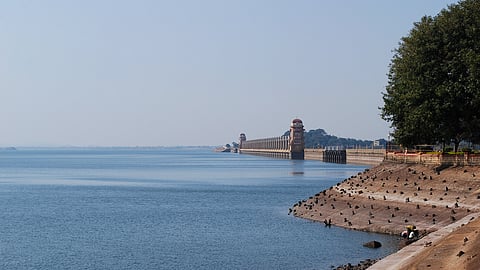
This study titled 'Irrigation infrastructure: A view from below - The case of the Tungabhadra river' on the irrigation infrastructure constructed over the Tungabhadra river, zooms in on the river - to examine the condition of these schemes by following the river as it flows, and show how simmering tensions are likely to manifest as full-fledged conflicts.
Location of the study
The study focuses on the 250 km stretch of river - beginning at the Tungabhadra dam and leading to the confluence of the river with the Krishna River.
It examines the condition of the two main canals of the Tungabhadra dam, namely the Rajolibanda anicut and the Sunkesula anicut (KC canal), and the conflicts arising around them.
Other schemes on the river – various mini-hydel projects and lift irrigation projects under construction and in operation during these two years (2003 – 2005) – are also discussed.
The study plan
The study provides an overview of the various river valley development projects taken up since 1950s and briefly outlines their functioning over the next four decades.
It examines the issues around water schedules and delivery in the main canals of some of the schemes along the Tungabhadra river during the monsoons of 2003 and 2004.
It aims at gaining deeper insights into the economic, political and technical compulsions of operating and maintaining riverine schemes in the form of:
Understanding and exploring the causes of water conflicts between upstream and downstream users
The nature of problems associated with canal irrigation systems and the impact of users’ struggles on major canal repairs and tail-end supply
The selective nature of political involvement, and exacerbation of conflicts over mini-hydel and lift irrigation schemes being constructed.
What does the study reveal?
The study finds that multiple problems related to canal repair and tail end deprivation persist due to lack of accountability; lack of regular repair and maintenance that leads to accumulation of silt affecting water flows of the river; limited availability of funds; inequity in water distribution affecting the tail enders; power play between different levels of stakeholders that leaves some people to gain by getting more water while leaving others, and the lack of adequate research to study the appropriateness of the technologies and designs used. Lack of adequate data also limits attempts to evaluate the performance of the irrigation schemes.
The complete report on the study can be downloaded from below:
